We wish a warm welcome to Malak and Carmen and a successful start into the NMSB world. Malak is going to explore mechanical stability and dendritic, axonal deformations under external constrainst, while Carmen will explore the mechanics of intracellular organelles. Check out their interests on our team pages.
Uncategorized
Bye, Santi
Santiago Ortiz successfully defended his Master thesis about active rheology in zebrafish development. Congrats Santi and see you back for your PhD.
18+ ICFO PhD Fellowships available
If you are looking for a place to stay and do science in the realm of cellular neuroscience and optogenetics with a beautiful genetic model organisms and/or mechanobiology with microfluidics, optical tweezers and genetically encoded tension sensors, do not look any further! ICFO is offering 18 fellowships and we have plenty of projects to choose from. More info under jobs.icfo.eu or simply write Michael an eMail to express your interest.
Welcome, Santi
We wish a very warm welcome to Santiago Ortiz, who recently joined us as a BIST master student. Santiago performed his undergrad in Universidad de los Andes, Colombia, studying physics and biology. He will work closely with Frede to probe more nuclear mechanics, continuing the colaboration with Ruprecht and Wieser labs. Welcome, Santi and happy tweezing.
NMSB network analysis
The lab in nodes and edges;
Click on a project (purple node) and find out who is working with whom.
Welcome, Shadi
After a long and exhausting hiatus from the perennial and activity-modulated Corona-virus plague, we have the pleasure to welcome Shadi Karimi to the lab. Shadi will give a new twist to active microfluidics and we wish her a fantastic start!
New paper online
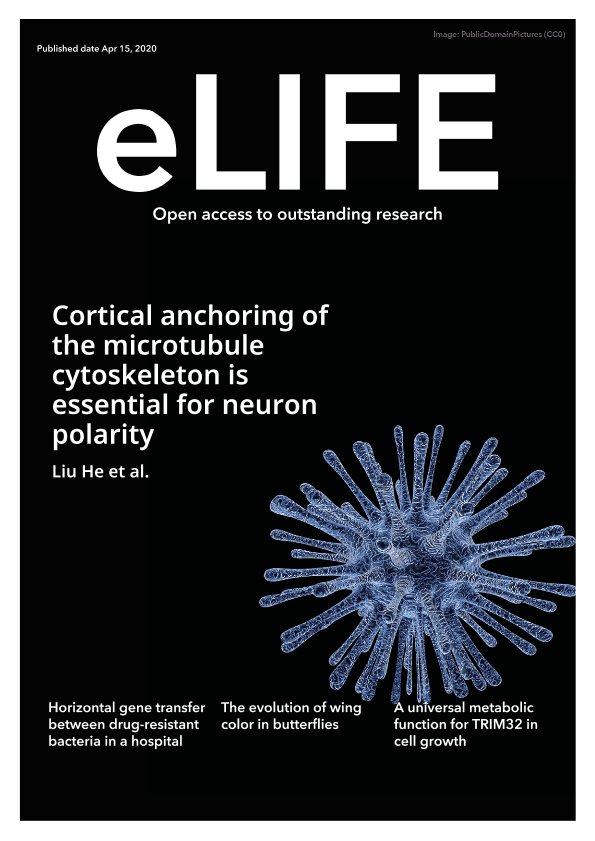
Our collaboration with Martin Harterink from University of Utrecht and Stefan Wieser @ICFO was just published in eLife. With a combination of biochemistry, cell biology and superresolution microscopy, we uncovered a ternary complex that is involved in anchoring the cortical spectrin cytoskeleton to the microtubules. Not suprisingly, this ternary complex contain ankyrin/unc-44 and a MT-binding protein CRMP/unc-33, which are bridged together with the worm-worlds most favorite protein, unc-119.
https://elifesciences.org/articles/55111
Check it out!
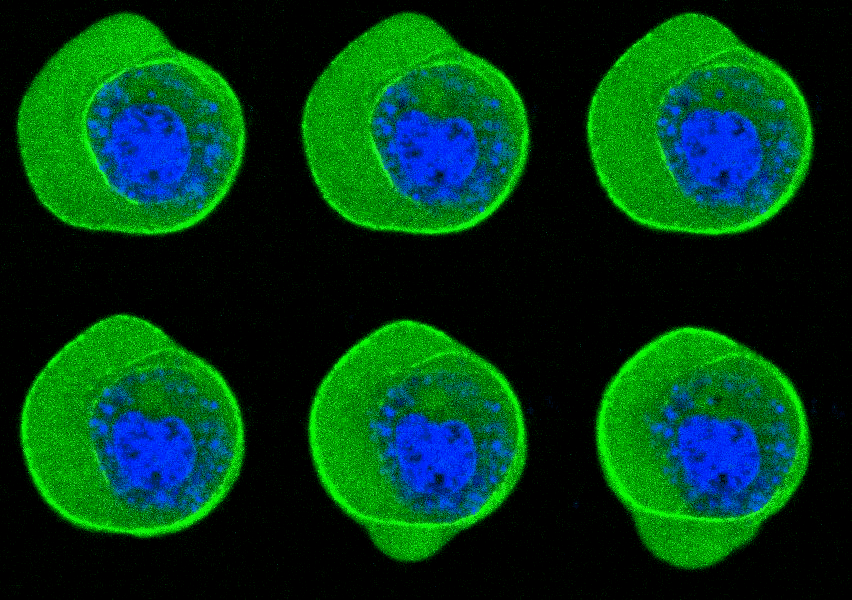
Preprint online with Ruprecht (CRG), Wieser and Loza labs (ICFO) lab on nuclear control of morphodynamics during early zebrafish development. Using an optical trapping assay combined with spinning disk confical microscopy we were able to measure the mechanics of the nucleus in relation to single cell mechanosensation.
https://www.biorxiv.org/content/10.1101/865949v1
New Preprint online
If you ever wondered where the unc-119 phenotype comes from in your Mossci worms, the results of a wonderful collaboration with the Harterink (Utrecht) and Wieser (ICFO) labs are now posted on the bioRxiv. UNC-119 might be the missing link between the spectrin and microtubule cytoskeleton, at forms a ternary complex with unc-44/ankyrin and unc-33/crmps – surprisingly, it shares similar organization as the 190nm periodicity of the actin/spectrin cytoskeleton. Check it out!
Welcome Rachele
We have the pleasure to host Rachele Catalano as a Maria Yzuel Fellow, a freshly baked awardee for the support of women in science. We are excited to work with Rachele in a joint project with Pablo Loza’s group aimed towards the implementation of novel light field methods to detect fast calcium transient in moving animals. Good luck, Rachele, and enjoy your time in NMSB+SLN.